Start with the week you actually have
Before adding a new routine, put the fixed points on the page. A small starting exercise for a crowded week.
A weekly plan can begin with what is already true. School finishes at a particular time. A work shift has changed. Someone needs a ride. Dinner still needs a place in the evening.
Before deciding what else to fit in, put three fixed commitments on one page. Include the time and the person who has agreed to handle each one.
Find the collision
Look for the point where two commitments ask for the same person’s time. Perhaps the work call ends when practice starts, or a delivery needs someone at home during pickup.
You do not need to solve every possible problem. Start with the collision most likely to affect this week.
Agree on an owner
Writing a name is a proposal until that person accepts it. Ask a specific question: “Can you handle pickup on Wednesday at four?” Then confirm what needs to happen before and after it.
The same idea works when you plan on your own. If someone else might help, keep the arrangement marked open until they reply.
Give the plan a home
Choose one place the people involved can find. A paper sheet inside a kitchen cupboard can work. So can a shared document or the calendar you already use.
Keep private family details out of public view. Put time-specific reminders on the calendar and practical decisions on the weekly sheet, so you are not maintaining competing versions of the same plan.
Leave one thing smaller
One flexible task may need to move, shrink, or wait. That is a planning decision. Write it down so you can stop treating it as an unspoken obligation.
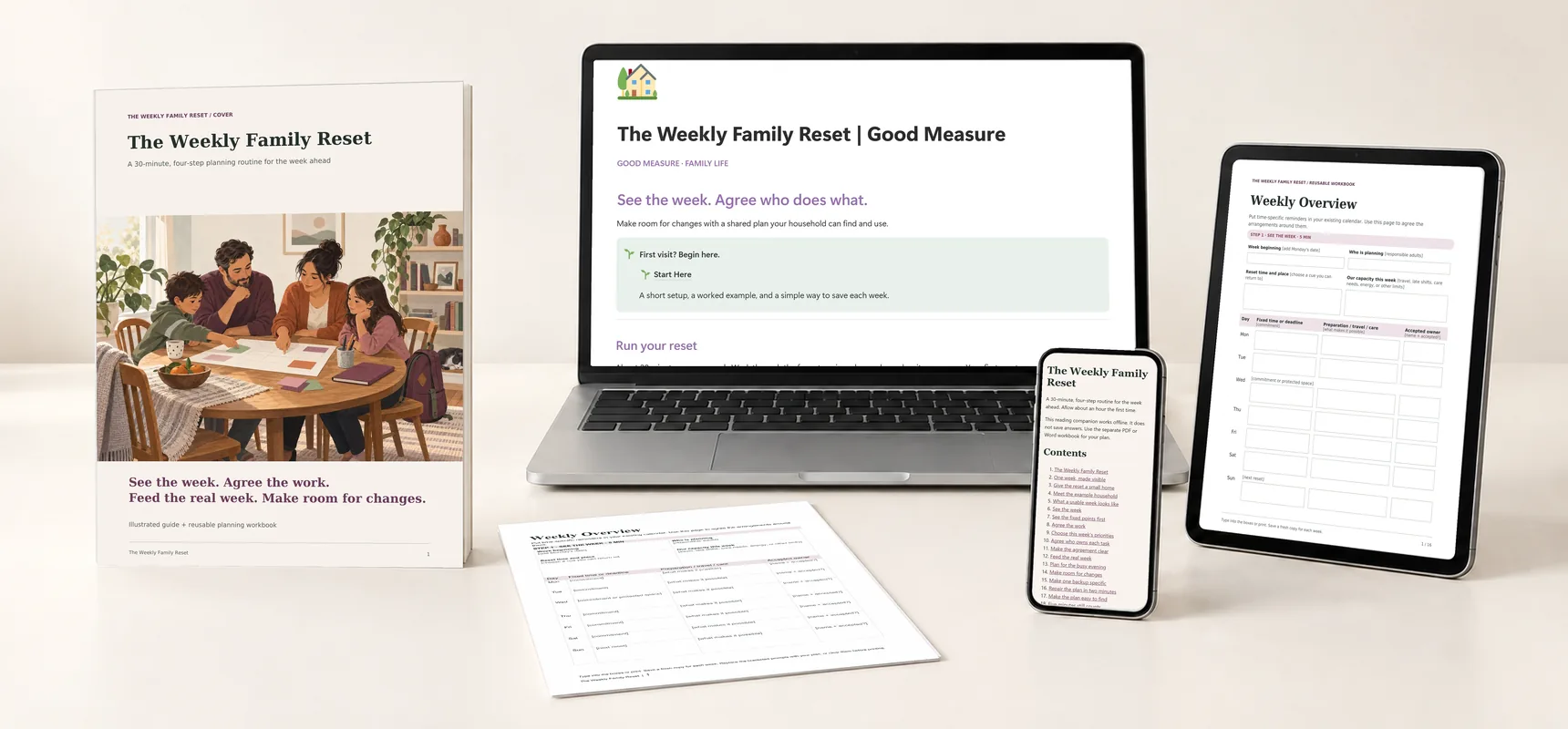
The Weekly Family Reset turns these decisions into a suggested routine, with a shorter version for weeks when time or energy is limited. The timing is a starting point, not a promise.